Company Profile
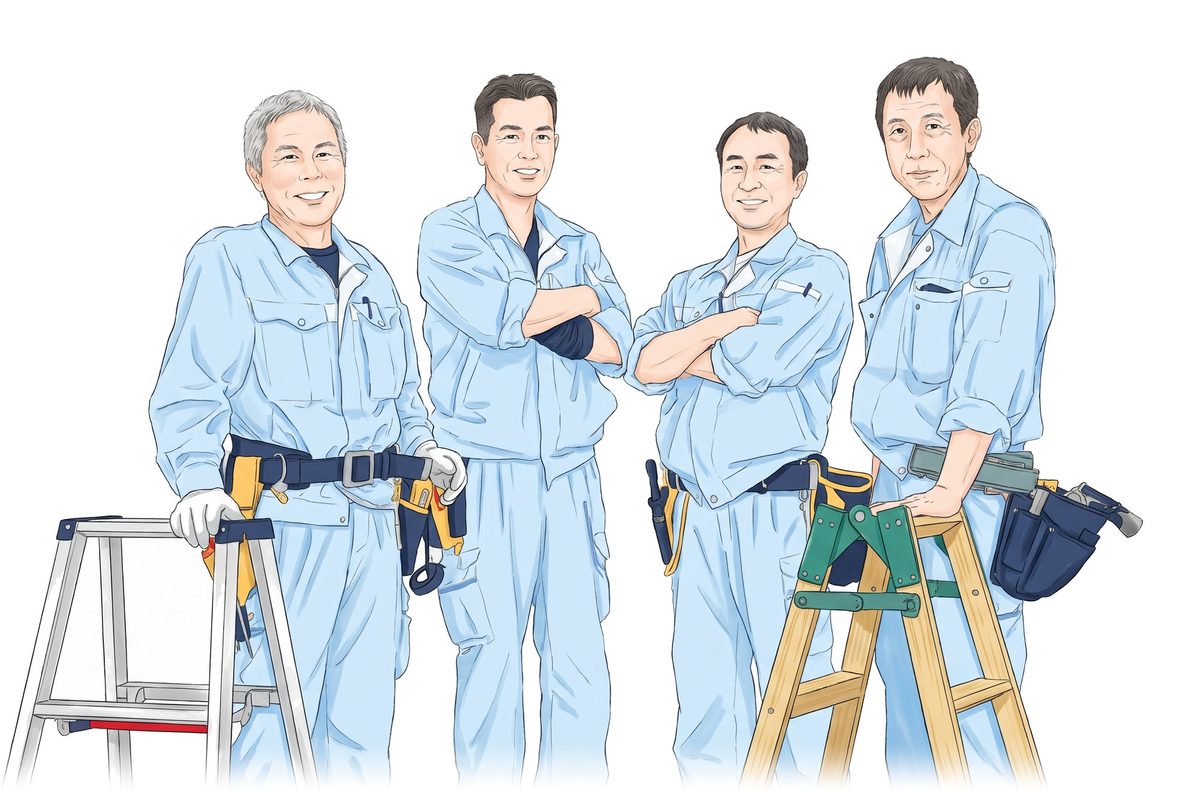
Electrical installation work across the Kanto region, centred on Chiba Prefecture.
Message from the Representative Director
Protecting the everyday light
with reliable skills
Since its founding in 1955 (Showa 30), Takane Electric has been engaged in electrical installation work in Funabashi. In 2025 (Reiwa 7), we marked our 70th anniversary. We are deeply grateful to our customers for their patronage over so many years, to our partner companies, and to the employees and their families who have supported the company.
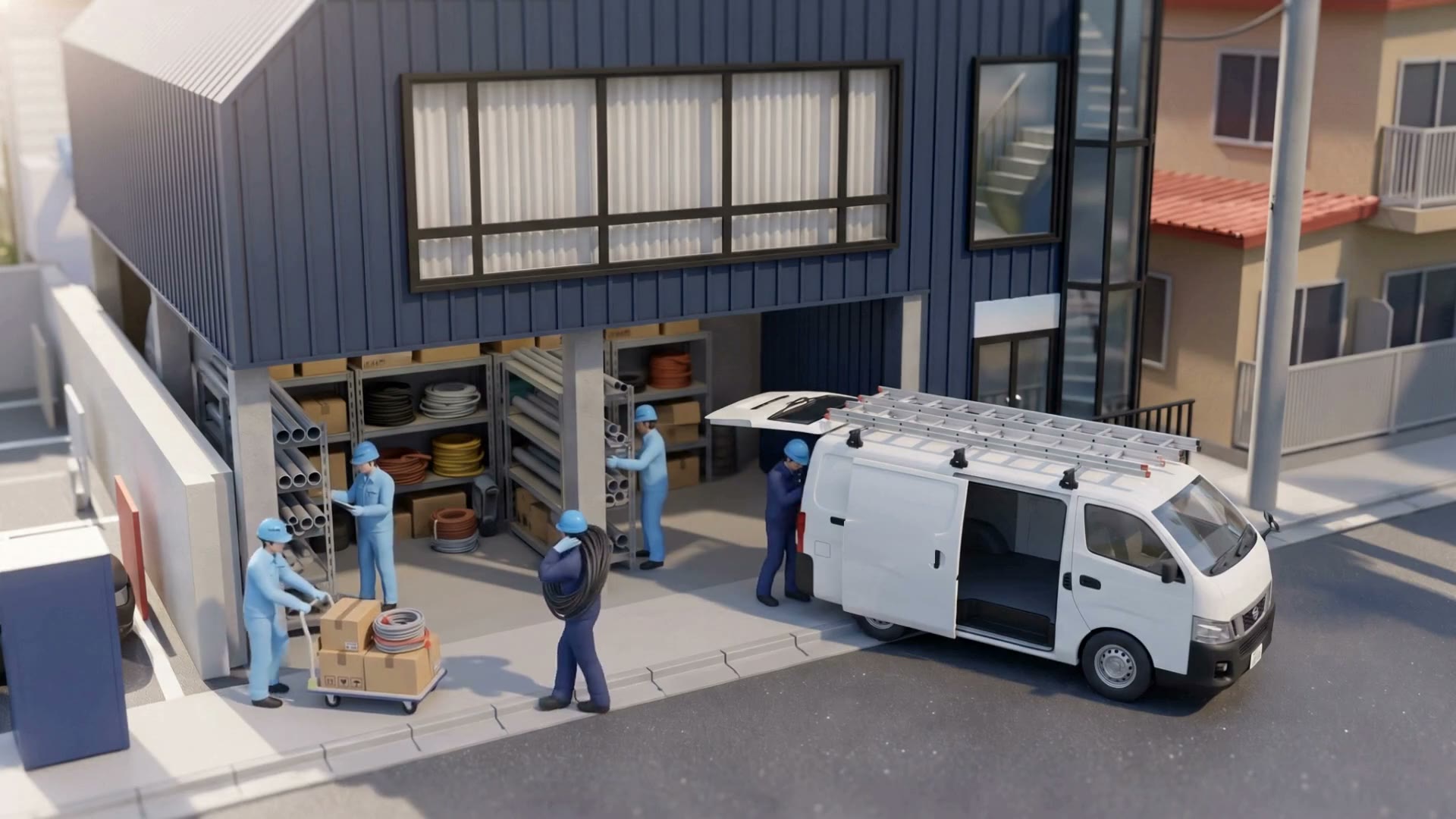
Our work is the electrical installation, repair and renovation of facilities for government agencies and local authorities, UR rental housing, Chiba prefectural housing and more. Turn on a switch and the light comes on; electricity is there to use, as a matter of course. Our duty is to keep it that way, day after day, on every site.
The further AI and digital technology spread, the larger the role of the electricity that supports them. That is why we believe that developing people with reliable skills is the foundation of the company. Learning the basics from no experience, working towards qualifications, being entrusted with larger jobs as experience grows: we will keep building a workplace where young people can picture their future.
Holding to our motto, “Integrity and Trust”, and working together with my brother, Director Yuji Murakami, and with all our employees, we will remain a company the community needs. We ask for your continued support.
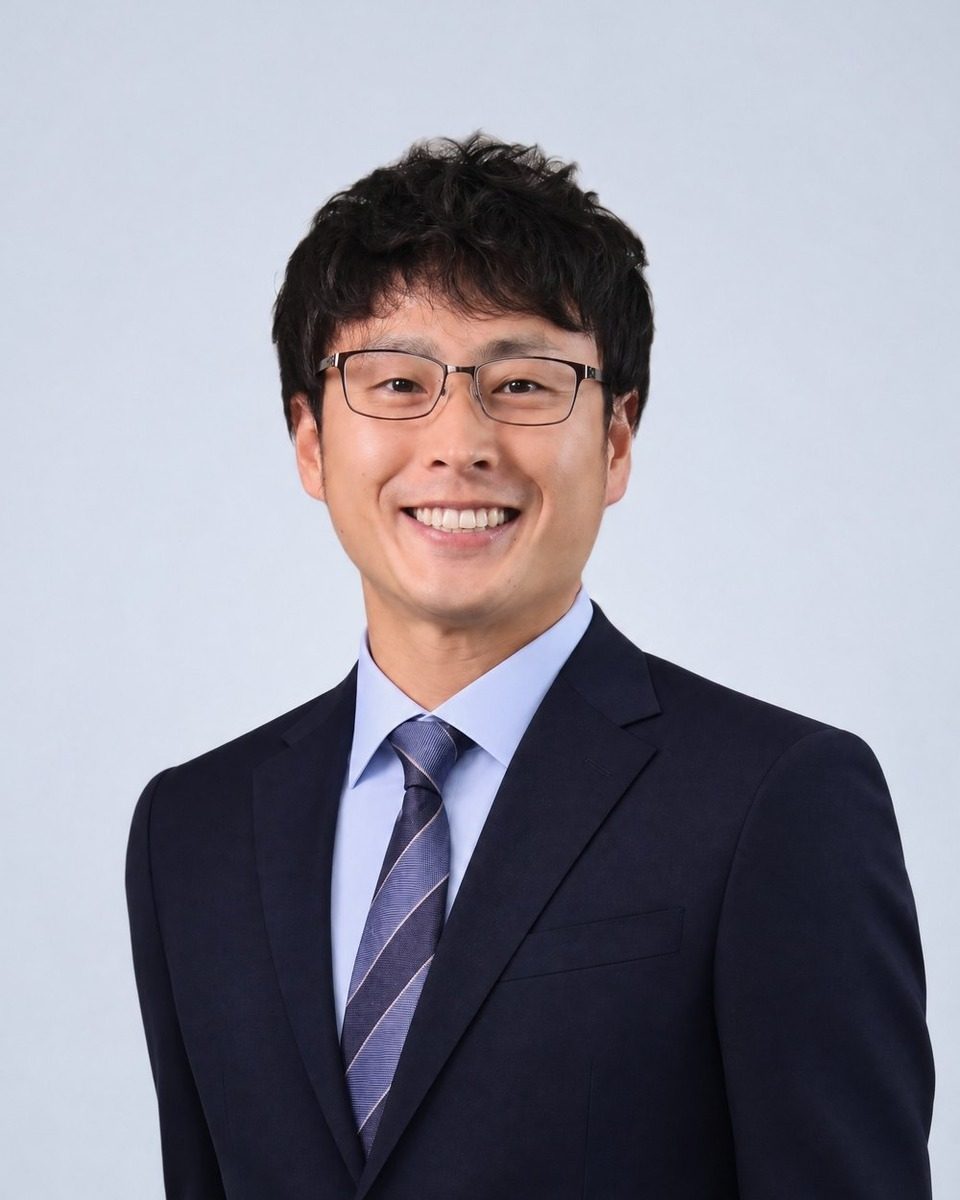
Takuhiro Murakami, Representative Director
Corporate Philosophy
Integrity and Trust (Seijitsu to Shinrai)
By carrying out electrical work that gives everyone safety, peace of mind and satisfaction, we will build a company of “integrity and trust”, our motto.
Company Data
Our company name and address, construction business licence and number of qualified staff, in one table. Figures are as of 31 August 2026.
- Founded
- April 1955 (Showa 30)
- Incorporated
- May 1981 (Showa 56)
- Capital
- JPY 20 million
- Employees
- 30(as of 31 August 2026)
- Company name
- Takane Electric Co., Ltd. (Kabushiki Kaisha Takane Dengyo)
- Representative
- Takuhiro Murakami, Representative Director
- Officers
- Takuhiro Murakami, Representative Director /
Yuji Murakami, Director - Office
- Head office: 4-1-28 Matsugaoka, Funabashi, Chiba
Tel 047-464-5262
Fax 047-465-8510
Email info@takanedengyo.com
http://takanedengyo.com - Group company
- Matsutaka Denki Co., Ltd.
- Business lines
- General electrical systems, air-conditioning systems, telecommunications systems, fire protection systems, high-voltage power receiving equipment
- Construction business licence
- Chiba-ken Chiji Kyoka (Tokutei) Dai 018362-go (Chiba Prefectural Governor Licence, Specified, No. 018362), Electrical Works
- Banks
- The Chiba Bank, Takanedai Branch;
Resona Bank, Kita-Narashino Branch - Principal clients
- Funabashi City; Nihon Sogo Jyuseikatsu Co., Ltd.; Chiba Prefecture; Tokyo Electric Power Company; Urban Renaissance Agency (UR); TCS Co., Ltd.
- Principal suppliers
- Kojima Denki Kogyo Co., Ltd.; Tanaka Shoji Co., Ltd.; Yamato Denki Co., Ltd.
- Memberships
- Chiba-ken Denki Koji Kogyo Kumiai, Funabashi Branch (Chiba Prefecture Electrical Contractors’ Association); Funabashi Chamber of Commerce and Industry
- Qualified staff
- Holders of electrical work qualifications24
Access
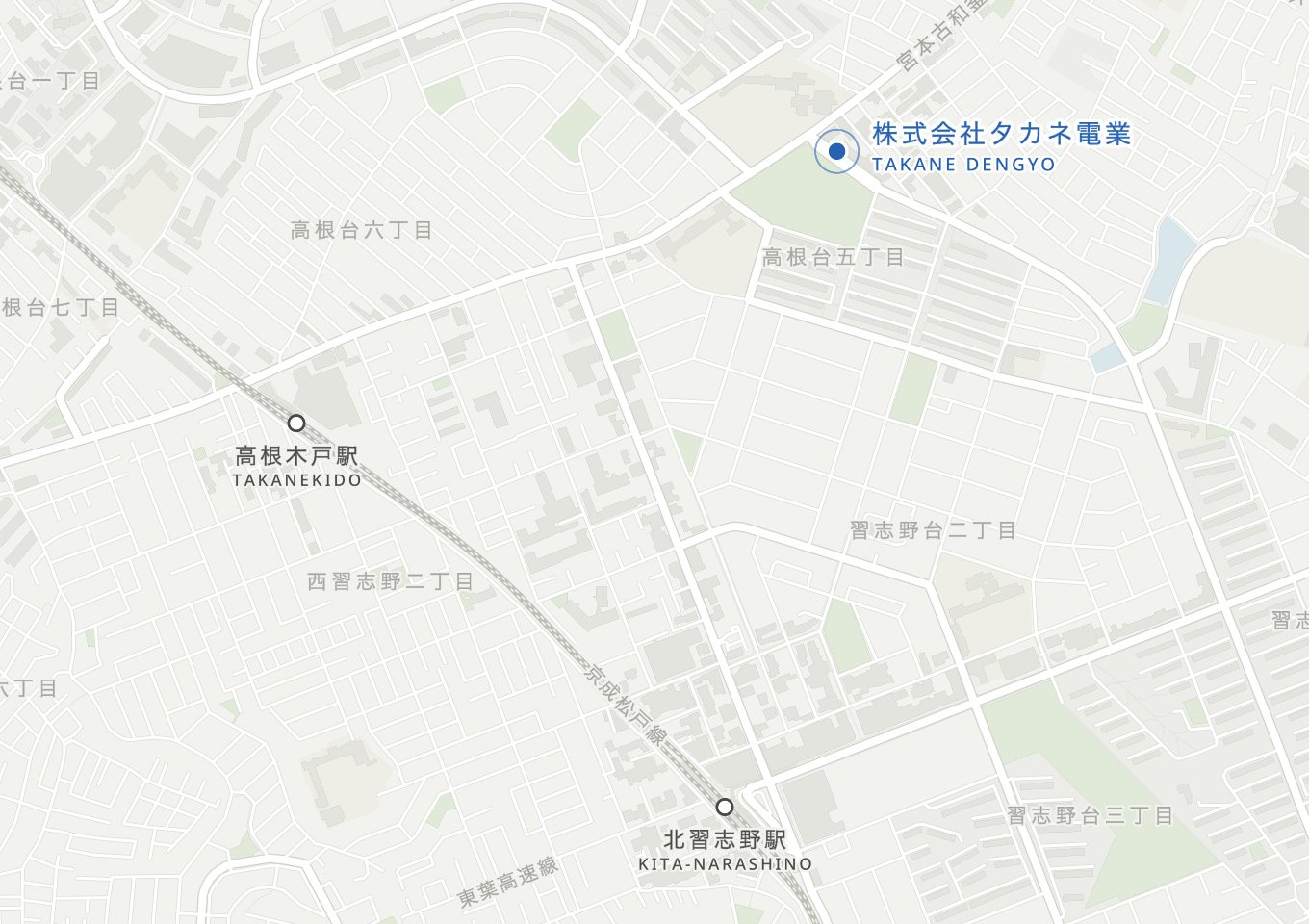
The head office is in Matsugaoka 4-chome, Funabashi, just north of Takanekido Neighbourhood Park, about 900 m from Takanekido Station and about 1 km from Kita-Narashino Station.
- Address
- 4-1-28 Matsugaoka, Funabashi, Chiba 274-0064, Japan
- Tel
- 047-464-5262
- Fax
- 047-465-8510
- Hours
- Weekdays 9:00–17:00
Group Company
Matsutaka Denki Co., Ltd.
Matsutaka Denki Co., Ltd. is a group company of Takane Electric. Together with Takane Electric, it carries out electrical installation work in the region.
- Company name
- Matsutaka Denki Co., Ltd.
- Chair
- Yumiko Murakami
- Representative Director
- Yuji Murakami
- Business
- Electrical installation work
History
Our company’s milestones, set beside what was happening in Japan in the same year.
1955Showa 30
Kozo Yamada founds Yamada Neon in Tokyo.
That year in Japan
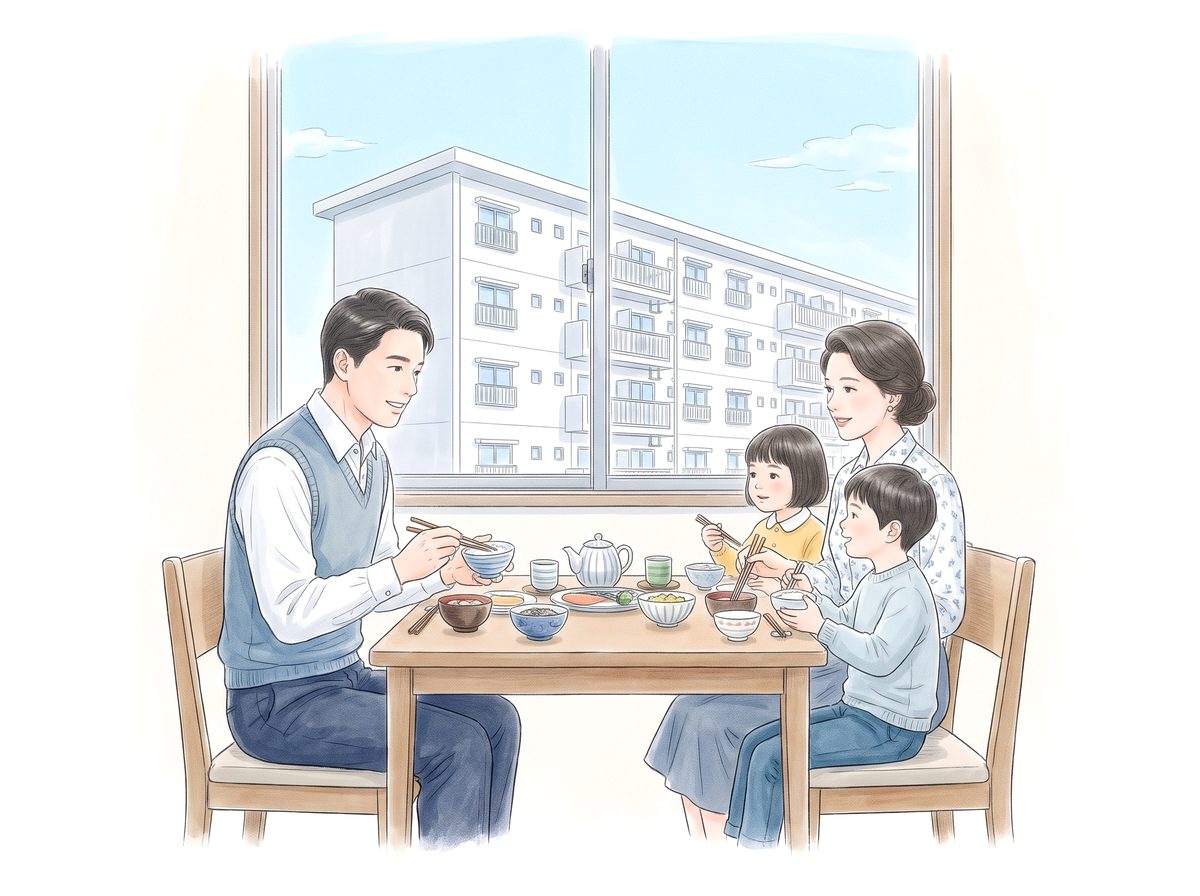
The Japan Housing Corporation is founded
In a year when the country was short of 2.8 million homes, the government set up the Japan Housing Corporation. It built apartment buildings one after another and spread a new way of living around the “dining kitchen”, where families could eat in the kitchen. It was the beginning of today’s Urban Renaissance Agency (UR).
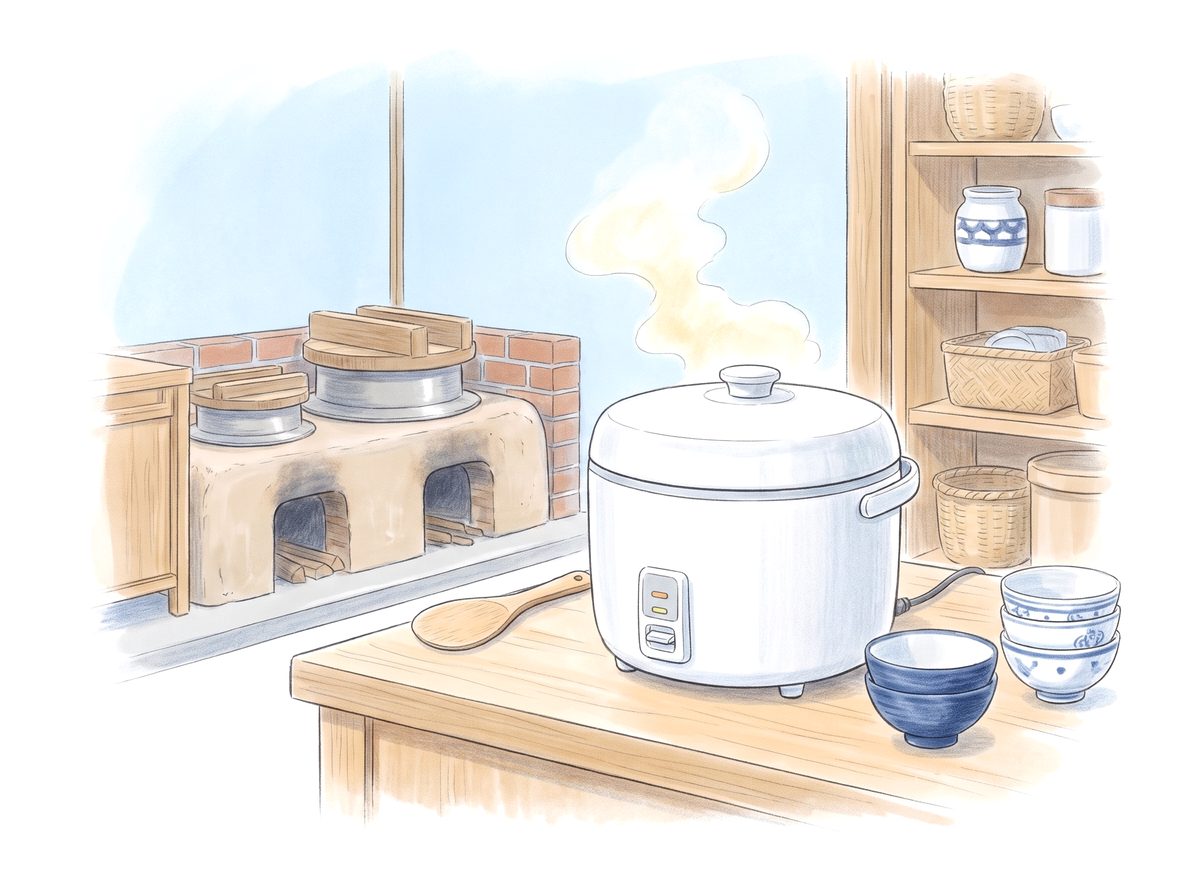
Rice at the flick of a switch
The automatic electric rice cooker went on sale. There was no longer any need to watch the fire under the pot: one switch, and the rice was cooked. It cut housework time sharply, and four years later it was in about half the homes in Japan.
1965Showa 40
Renamed Yamada Denki Shokai; moves to 3-3 Takanedai, Funabashi, Chiba.
That year in Japan
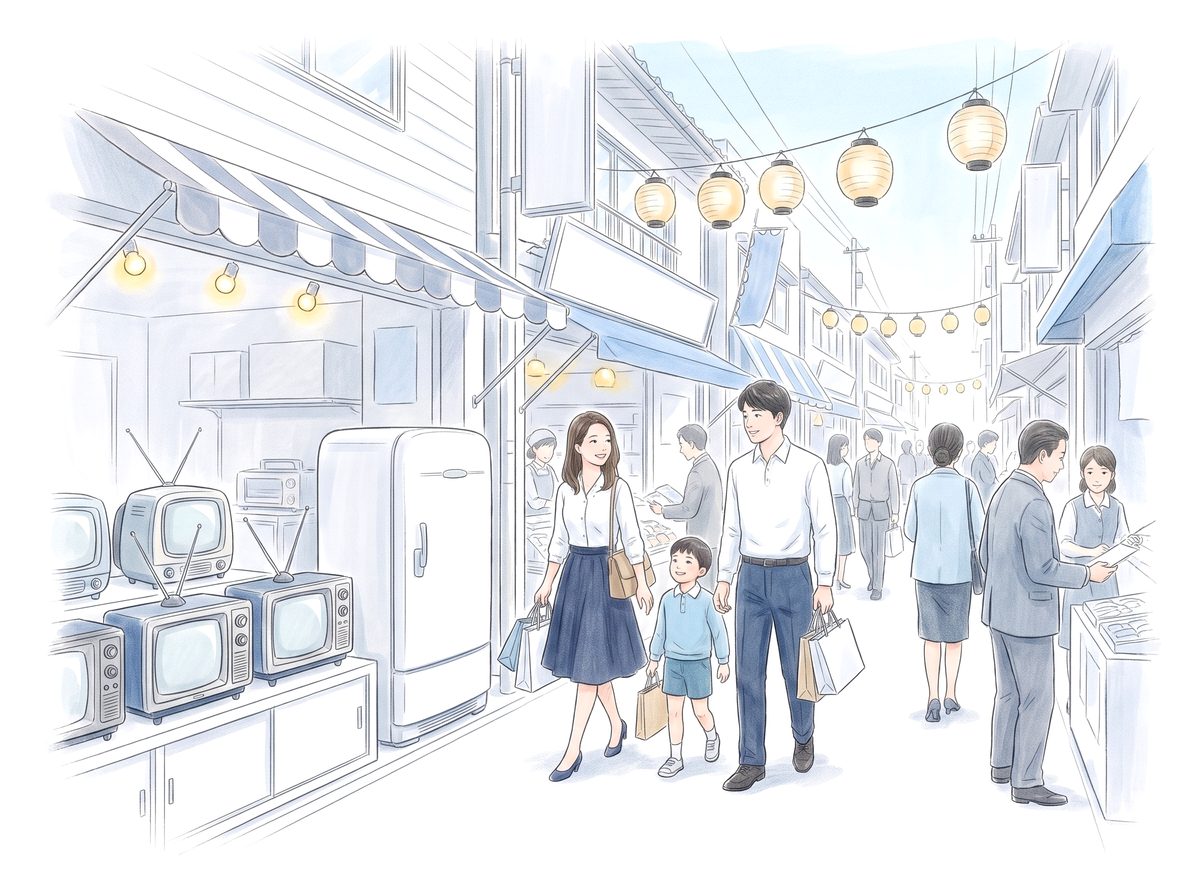
The Izanagi boom begins
From a low point in October 1965, the economy began to rise. The boom lasted 57 months, until July 1970, and came to be called the Izanagi boom. It was a time of great growth for the Japanese economy.
The Meishin Expressway opens in full
On 1 July 1965, the whole 189.7 km of the Meishin Expressway, from Komaki in Aichi Prefecture to Nishinomiya in Hyogo Prefecture, was connected. It was Japan’s first expressway linking major cities, and travel between Nagoya and Osaka became much faster.
1978Showa 53
Moves to 2-22-2 Matsugaoka, Funabashi, Chiba.
That year in Japan
A new international airport at Narita
On 20 May 1978, New Tokyo International Airport opened in Narita, Chiba Prefecture. Today it is Narita International Airport. As Japan’s gateway by air, it carried people and goods between Chiba and the world.
1979Showa 54
Kozo Yamada passes away; his wife, Emiko Yamada, becomes head of the business.
That year in Japan
The Energy Conservation Act is passed
In the oil crises of 1973 and 1979, fear that the oil might stop threw the whole country into confusion. Learning from this, in 1979 Japan passed the Energy Conservation Act to use energy without waste. It is still the foundation of energy saving today.
1981Showa 56
Takane Electric Co., Ltd. is incorporated (capital JPY 3 million).
Emiko Yamada becomes Representative Director.
Takashi Murakami becomes Senior Managing Director.
Applies for and registers a construction business licence.That year in Japan
The “new seismic standard” for buildings
On 1 June 1981, the rules on how well buildings must withstand earthquakes were substantially revised. The “new seismic standard” aims to keep buildings from collapsing and taking lives even in a major earthquake, and it remains the measure of a building’s safety today.
The Housing and Urban Development Corporation is founded
The Japan Housing Corporation and the Housing and Land Development Public Corporation merged to form the Housing and Urban Development Corporation. Responsible for housing and town planning, it led to today’s Urban Renaissance Agency. It set out in the same year as Takane Electric.
1983Showa 58
Moves to 4-1-28 Matsugaoka, Funabashi, to build a new head office.
That year in Japan
Tokyo Disneyland opens in Urayasu
On 15 April 1983, Tokyo Disneyland opened on reclaimed land in Urayasu, Chiba Prefecture. It was the first Disney theme park built outside the United States.
The Sea of Japan earthquake and tsunami
On 26 May 1983, a magnitude 7.7 earthquake struck off Akita Prefecture, and a large tsunami hit the Sea of Japan coast of the Tohoku region. Of the 104 people who died, 100 were killed by the tsunami, a lasting lesson in preparing for tsunamis.
1990Heisei 2
Takashi Murakami becomes Representative Director.
That year in Japan
The Keiyo Line reaches Tokyo Station
On 10 March 1990, the Shin-Kiba–Tokyo section of the Keiyo Line opened, completing the line from Tokyo to Soga. The route also serves Minami-Funabashi Station in Funabashi, and it linked the Chiba waterfront directly with Tokyo Station.
The “Flower Expo” in Osaka
For 183 days, from 1 April to 30 September 1990, the International Garden and Greenery Exposition was held at Tsurumi Ryokuchi in Osaka. Known as the Flower Expo, it brought gardens of flowers and greenery from countries around the world.
1992Heisei 4
Capital increased to JPY 10 million.
That year in Japan
Schools close one Saturday a month
From September 1992, the second Saturday of each month became a school holiday. It was the start of the five-day school week, meant to give children more time with their families and communities. In 1995 it became two Saturdays a month, and from 2002 every Saturday.
1993Heisei 5
Head office rebuilt.
That year in Japan
The J.League kicks off
On 15 May 1993, at the National Stadium in Tokyo, Japan’s first professional football league, the J.League, kicked off. It began with ten clubs, each aiming to put down roots in its home town.
The Rainbow Bridge opens
On 26 August 1993, the Rainbow Bridge across Tokyo Bay opened. A two-deck suspension bridge, with the Metropolitan Expressway above and an ordinary road and the Yurikamome transit line below, it links central Tokyo with the waterfront.
2004Heisei 16
ISO certification obtained: quality (ISO 9001, registration no. QSR-206).
That year in Japan
The Niigata Chuetsu earthquake
On 23 October 2004, a magnitude 6.8 earthquake struck the Chuetsu region of Niigata Prefecture, with seismic intensity 7 recorded in Kawaguchi (now part of Nagaoka). Sixty-eight people died, and a Joetsu Shinkansen train in service was derailed.
New banknotes appear
On 1 November 2004, new 10,000-yen, 5,000-yen and 1,000-yen notes were issued. To prevent counterfeiting, they used the latest techniques, including a hologram and pearl ink that shines when the note is tilted. The 5,000-yen note now bore Ichiyo Higuchi, and the 1,000-yen note Hideyo Noguchi.
2010Heisei 22
Website launched.
That year in Japan
The Narita Sky Access line opens
On 17 July 2010, the Narita Sky Access line opened, linking central Tokyo with Narita Airport through Chiba New Town. Its new express ran at 160 km/h, the fastest on any conventional line in Japan, and connected the city centre with the airport in as little as 36 minutes.
Hayabusa returns to Earth
On 13 June 2010, the asteroid probe Hayabusa ended a seven-year journey and delivered its capsule to Earth. It was the first time a probe that had landed on an asteroid returned to Earth, and the fine particles inside were confirmed to come from the asteroid Itokawa.
2012Heisei 24
Capital increased to JPY 20 million.
Construction business licence changed from general to specified (Chiba Prefectural Governor Licence, Specified, No. 018362).That year in Japan
The feed-in tariff for electricity
On 1 July 2012, a scheme began under which power companies buy electricity generated from solar, wind and other renewable sources at prices and for periods set by the government. Part of the cost is borne by every user of electricity, together with their electricity bills.
Tokyo Skytree opens
On 22 May 2012, the 634 m Tokyo Skytree opened in Oshiage, Sumida, Tokyo. The tallest free-standing broadcasting tower in the world, it transmits signals including digital terrestrial television.
2018Heisei 30
Representative Director Takashi Murakami becomes Chair of the Board.
Yumiko Murakami succeeds him as Representative Director.That year in Japan
A blackout across all of Hokkaido
On 6 September 2018, the Hokkaido Eastern Iburi earthquake struck, and the whole of Hokkaido lost power: Japan’s first area-wide “blackout”. At the peak, about 2.95 million households were without light, and a national body compiled the causes and measures to prevent a recurrence.
The market moves from Tsukiji to Toyosu
On 11 October 2018, Toyosu Market opened as Tokyo’s new central wholesale market. Moved from Tsukiji, it keeps fish and vegetables fresh inside closed, temperature-controlled buildings.
2019Reiwa 1
ISO certification renewed: quality (ISO 9001:2015, registration no. QSR-206).
ISO certification registered: environment (ISO 14001:2015, registration no. ESR-022).
Commended as a Funabashi City Excellent Contractor for fiscal 2019.That year in Japan
Typhoon Faxai brings a massive blackout
On 9 September 2019, Typhoon No. 15 made landfall near Chiba City, where a maximum gust of 57.5 m/s was recorded. Fallen trees brought down power lines, about 640,000 households in the prefecture lost power, and restoration took about two weeks.
The era name becomes Reiwa
On 1 May 2019, the era name changed from Heisei to Reiwa. “Reiwa” was taken from the preface to a group of plum-blossom poems in the Man’yoshu, Japan’s oldest anthology of poetry, and was the first era name chosen from a Japanese classic.
2020Reiwa 2
Sponsorship agreement with FAB Sports Academy (basketball club).
That year in Japan
The first state of emergency
On 7 April 2020, as the novel coronavirus spread, the first state of emergency was declared for seven prefectures, including Chiba. People were asked to cut contact with others by at least 70 per cent.
Plastic shopping bags are no longer free
From 1 July 2020, shops across Japan began charging for plastic shopping bags. The rule aims to reduce plastic waste and prompt people to rethink their everyday shopping.
2021Reiwa 3
Receives the Konju Hosho (Medal with Dark Blue Ribbon) from the Cabinet Office.
Holds an in-house event to mark the 40th anniversary of incorporation.That year in Japan
Tokyo 2020, in Chiba too
Postponed by a year, the Tokyo 2020 Olympic and Paralympic Games were held. In Chiba Prefecture, Makuhari Messe hosted events including fencing and wrestling, and Tsurigasaki Beach in Ichinomiya hosted surfing, at the Olympics for the first time.
2023Reiwa 5
Sponsorship agreement with a local sports team.
That year in Japan
COVID-19 moves to “Category 5”
On 8 May 2023, COVID-19 was reclassified as a Category 5 infectious disease, the same as seasonal influenza. The system under which the government asked everyone alike to stay at home came to an end, and precautions became a matter for each person to decide.
A hundred years since the Great Kanto Earthquake
The year marked a hundred years since the Great Kanto Earthquake of 1 September 1923. Seismic intensity 6 was recorded in Chiba Prefecture too, and more than 100,000 houses collapsed. It became a year for the country and its communities to review their preparations for earthquakes.
2025Reiwa 7
Holds a 70th anniversary celebration (Hotel Springs Makuhari).
Takuhiro Murakami becomes Representative Director.That year in Japan
Expo 2025 Osaka, Kansai
For 184 days, from 13 April to 13 October 2025, Expo 2025 Osaka, Kansai was held on Yumeshima in Osaka. About 29.02 million visits were made over the period, bringing people into contact with the technology and culture of countries around the world.
Energy-efficiency standards for new homes
From April 2025, every newly built house and building must meet the national energy-efficiency standards. The rule raises the performance of insulation and equipment to reduce the energy used.
2026Reiwa 8
Moves to a holding company structure (group company: Matsutaka Denki Co., Ltd.).
Website renewed.That year in Japan
Twenty-four medals at the Winter Olympics
In February 2026, the Milano Cortina Winter Olympic Games were held in Italy. Japan won 24 medals, 5 gold, 7 silver and 12 bronze, its most ever at a Winter Games.
A 48-team World Cup
From June to July 2026, the FIFA World Cup was held in three countries: Canada, Mexico and the United States. It was the first tournament co-hosted by three countries, and the first with 48 teams.
Sources: That year in Japan
- 1955The Japan Housing Corporation is foundedUrban Renaissance Agency, “History of environmental initiatives” (Environmental Report 2025, reference material; in Japanese)(opens in a new tab)
- 1955Rice at the flick of a switchCultural Heritage Online (Agency for Cultural Affairs), “Toshiba automatic electric rice cooker”, Takaoka City Museum collection (in Japanese)(opens in a new tab) / Toshiba Lifestyle, “History of the automatic electric rice cooker” (in Japanese)(opens in a new tab)
- 1965The Izanagi boom beginsEconomic and Social Research Institute, Cabinet Office, “Reference dates of business cycles” (in Japanese)(opens in a new tab) / Cabinet Office, “Appendix 3-1: Patterns of major past business cycles” (in Japanese)(opens in a new tab)
- 1965The Meishin Expressway opens in fullNEXCO West Japan, “Sixty years since the full opening of the Meishin” (in Japanese)(opens in a new tab) / Norimono News, “Fifty years of the full Meishin: Japan’s first intercity expressway” (in Japanese)(opens in a new tab)
- 1978A new international airport at NaritaNarita International Airport Corporation, “History of Narita Airport” (in Japanese)(opens in a new tab)
- 1979The Energy Conservation Act is passedAgency for Natural Resources and Energy, “Japan, an energy-saving nation” (in Japanese)(opens in a new tab) / Agency for Natural Resources and Energy, Energy White Paper 2023, Part 3, Chapter 2 (in Japanese)(opens in a new tab)
- 1981The “new seismic standard” for buildingsBuilding Research Institute, lecture materials (fiscal 2021; in Japanese)(opens in a new tab) / Shizuoka City, “Glossary” (in Japanese)(opens in a new tab)
- 1981The Housing and Urban Development Corporation is foundedUrban Renaissance Agency, “History of environmental initiatives” (Environmental Report 2025, reference material; in Japanese)(opens in a new tab)
- 1983Tokyo Disneyland opens in UrayasuOriental Land, Annual Securities Report, “Corporate history” (opened April 1983; in Japanese)(opens in a new tab) / Bunshun Online (opened 15 April 1983; in Japanese)(opens in a new tab)
- 1983The Sea of Japan earthquake and tsunamiAkita Local Meteorological Office, Japan Meteorological Agency, “The 1983 Sea of Japan earthquake” (in Japanese)(opens in a new tab)
- 1990The Keiyo Line reaches Tokyo StationJapan Transport and Tourism Research Institute, “Chronology” (in Japanese)(opens in a new tab) / Tetsudo.com, “The Keiyo Line opens in full” (in Japanese)(opens in a new tab)
- 1990The “Flower Expo” in OsakaMinistry of Foreign Affairs, “Expositions held in Japan” (in Japanese)(opens in a new tab)
- 1992Schools close one Saturday a monthMinistry of Education white paper, “What the five-day school week aims for” (on the MEXT website; in Japanese)(opens in a new tab) / imidas, “Five-day school week” (in Japanese)(opens in a new tab)
- 1993The J.League kicks offForbes JAPAN, “1993: the J.League kicks off” (in Japanese)(opens in a new tab) / J.League, special page for the 100 Year Vision League (began in 1993 with ten clubs; in Japanese)(opens in a new tab)
- 1993The Rainbow Bridge opensMetropolitan Expressway, “Rainbow Bridge: steps of construction” (in Japanese)(opens in a new tab) / JAF Mate, “26 August is Rainbow Bridge Day” (in Japanese)(opens in a new tab)
- 2004The Niigata Chuetsu earthquakeNiigata Local Meteorological Office, Japan Meteorological Agency, “The 2004 Niigata Chuetsu earthquake” (in Japanese)(opens in a new tab)
- 2004New banknotes appearBank of Japan, “Anti-counterfeiting features of the Bank of Japan notes issued in 2004” (in Japanese)(opens in a new tab)
- 2010The Narita Sky Access line opensKeisei Electric Railway news release (tenth anniversary of Narita Sky Access; in Japanese)(opens in a new tab) / Keisei Electric Railway news release (Skyliner, top speed 160 km/h; in Japanese)(opens in a new tab)
- 2010Hayabusa returns to EarthJAXA press release (17 November 2010; in Japanese)(opens in a new tab) / AFPBB News (the first such return; in Japanese)(opens in a new tab)
- 2012The feed-in tariff for electricityTEPCO Energy Partner, “Outline of the feed-in tariff scheme” (in Japanese)(opens in a new tab)
- 2012Tokyo Skytree opensAV Watch, “Tokyo Skytree to open on 22 May 2012” (announcement by Tobu Railway; in Japanese)(opens in a new tab) / tenki.jp (five years since opening; in Japanese)(opens in a new tab)
- 2018A blackout across all of HokkaidoOrganization for Cross-regional Coordination of Transmission Operators, materials of the review committee on the large-scale blackout after the 2018 Hokkaido Eastern Iburi earthquake (in Japanese)(opens in a new tab) / Hokkaido Shimbun (about 2.95 million at the peak; in Japanese)(opens in a new tab)
- 2018The market moves from Tsukiji to ToyosuGO TOKYO (Tokyo Convention & Visitors Bureau), “Toyosu Market” (in Japanese)(opens in a new tab) / Tokyo Metropolitan Government, Bureau of Public Health, materials (in Japanese)(opens in a new tab)
- 2019Typhoon Faxai brings a massive blackoutMinistry of Economy, Trade and Industry, “Review of the power restoration process after Typhoon No. 15” (in Japanese)(opens in a new tab) / Chiba Prefecture, “The 2019 Boso Peninsula Typhoon” (in Japanese)(opens in a new tab)
- 2019The era name becomes Reiwanippon.com (Jiji Press; in Japanese)(opens in a new tab) / Tottori Prefecture, “The new era name, Reiwa” (in Japanese)(opens in a new tab)
- 2020The first state of emergencyKeitai Watch (7 April 2020; in Japanese)(opens in a new tab) / Ryutsu News (in Japanese)(opens in a new tab)
- 2020Plastic shopping bags are no longer freeWakayama Prefecture, “Charging for plastic shopping bags” (in Japanese)(opens in a new tab) / Aichi Prefecture, “Charging for plastic shopping bags” (in Japanese)(opens in a new tab)
- 2021Tokyo 2020, in Chiba tooChiba Prefecture, “Events held in Chiba Prefecture” (in Japanese)(opens in a new tab)
- 2023COVID-19 moves to “Category 5”Ministry of Health, Labour and Welfare, web magazine “Kosei Rodo”, “On the front line of COVID-19”, no. 30 (in Japanese)(opens in a new tab)
- 2023A hundred years since the Great Kanto EarthquakeCabinet Office, Disaster Management, special page “100 years since the Great Kanto Earthquake” (in Japanese)(opens in a new tab)
- 2025Expo 2025 Osaka, KansaiMinistry of Economy, Trade and Industry, materials of the Expo 2025 budget execution monitoring committee (in Japanese)(opens in a new tab)
- 2025Energy-efficiency standards for new homesMinistry of Land, Infrastructure, Transport and Tourism, press release (in Japanese)(opens in a new tab) / Sapporo City, “Revision of the Building Energy Efficiency Act from April 2025” (in Japanese)(opens in a new tab)
- 2026Twenty-four medals at the Winter Olympicsnippon.com (20 February 2026; in Japanese)(opens in a new tab) / Akita Sakigake Shimpo (team disbanding ceremony; a record 24 medals; in Japanese)(opens in a new tab)
- 2026A 48-team World CupTV Tokyo, “FIFA World Cup 2026: tournament schedule” (in Japanese)(opens in a new tab) / GOAL, “2026 World Cup: the essentials” (in Japanese)(opens in a new tab)
We are looking for colleagues
to grow with and build the future together.