Behind
every switch.
Electrical works in Funabashi, since 1955.
No. 01November 2026Funabashi, Chiba
Takane Electric Co., Ltd.
An electrical contractor in Funabashi, Chiba Prefecture. We carry out electrical installation, repair and renovation work in schools, civic buildings, UR rental housing and Chiba prefectural housing.
Directory
- For Public ClientsLicences, qualifications, awards and track recordChiba Prefectural Governor Licence (Specified) No. 018362, Electrical Works. Funabashi City Excellent Contractor, fiscal 2019.
- Recruitment and ApplicationsFor those who will work with us, and their familiesWe welcome both new graduates and experienced workers. We also accept requests for company visits and internships.
- Project EnquiriesFor main contractors, UR and private clientsElectrical installation and repair for schools, civic buildings, UR rental housing and Chiba prefectural housing. Call 047-464-5262 (weekdays 9:00–17:00) or use the enquiry form.
Prologue
Turn on a switch in a classroom, and the lights come on./The wiring runs above the ceiling and inside the walls./At the end of a job, we turn on the switch./Only then does the electricity become visible.
Road and outdoor
lighting works
At the Japan Water Agency’s Tone Ozeki weir, we replaced the road lighting fixtures; at Second Avenue, the outdoor and garden lights.
Since 1955
70 years
since Yamada Neon.
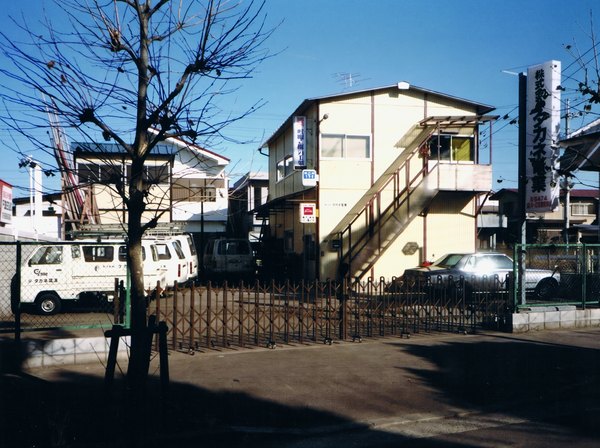
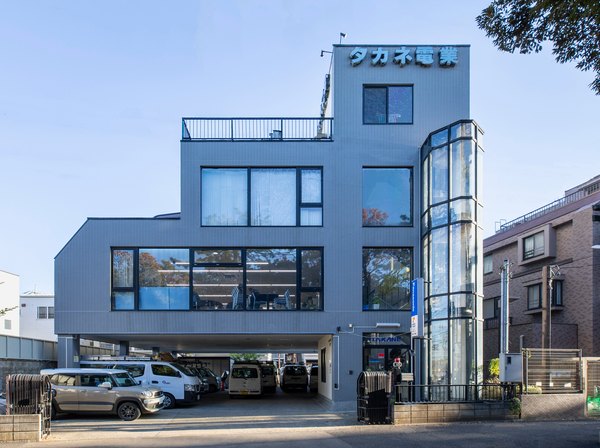
Founded in 1955 as Yamada Neon. Takane Electric Co., Ltd. was incorporated in 1981, and since 1983 the head office has stood on the same site in Matsugaoka, Funabashi.
- 1955Founded (Showa 30)
- 30Employees: 23 men, 7 women
- 10.3 yearsAverage length of service
- 24Holders of national electrical qualifications
Figures as of 31 August 2026Draft
Credentials
Funabashi City
Excellent Contractor, FY2019
Awards and licence numbers are listed under their official names.
- Award
- Funabashi-shi Yuryo Kensetsu Koji Hyosho, Yuryo Kensetsu Gyosha (Funabashi City Excellent Construction Work Award, Excellent Contractor)Fiscal 2019 (Reiwa 1)
- Decoration
- Konju Hosho (Medal with Dark Blue Ribbon)2021, Cabinet Office
- Construction business licence
- Chiba-ken Chiji Kyoka (Tokutei) Dai 018362-go (Chiba Prefectural Governor Licence, Specified, No. 018362)Denki Koji-gyo (Electrical Works)
- Qualified staff
- Qualified electrical staff24As of 31 August 2026Draft
- Principal clients
- Ministry of Defense; Ministry of Education, Culture, Sports, Science and Technology; Ministry of Health, Labour and Welfare; Chiba Prefecture; Funabashi City; Sakura City; Shiroi City; Urayasu City; Urban Renaissance Agency (UR); Nihon Sogo Jyuseikatsu; Chiba-ken Kyokyu Kosha
- Memberships
- Chiba-ken Denki Koji Kogyo Kumiai, Funabashi Branch (Chiba Prefecture Electrical Contractors’ Association)Funabashi Chamber of Commerce and Industry
People
The people who work
at Takane Electric
Those who go out to the sites, and those who support them at the head office: staff of the Engineering Headquarters, the Regional Division and General Affairs, and our two directors.
From the site
to the office.

Representative DirectorTakuhiro Murakami
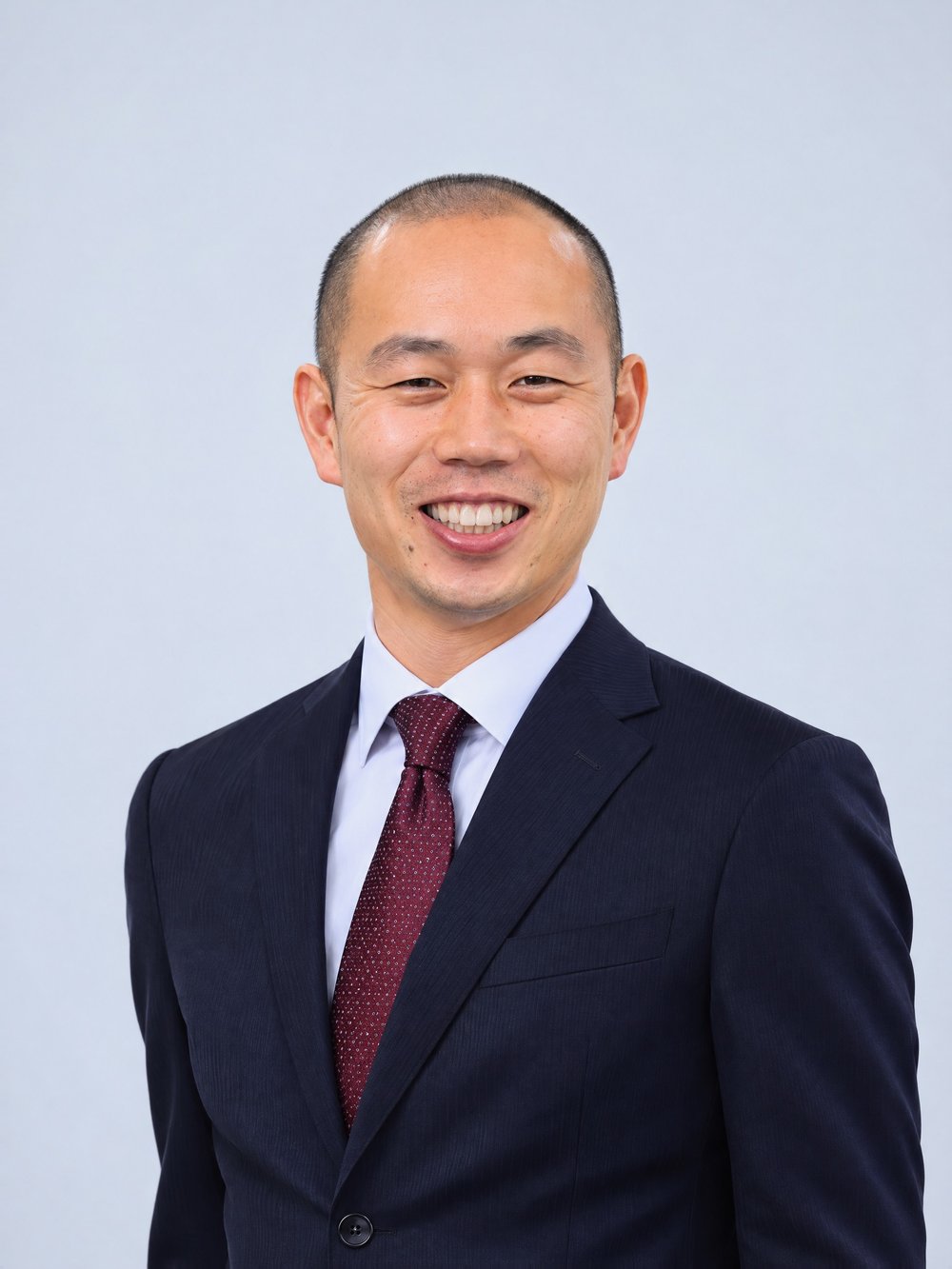
DirectorYuji Murakami

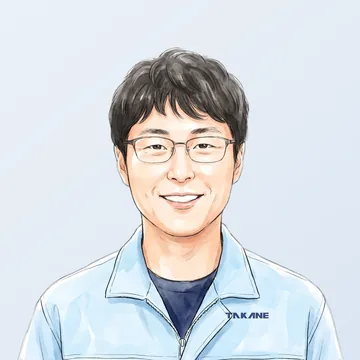
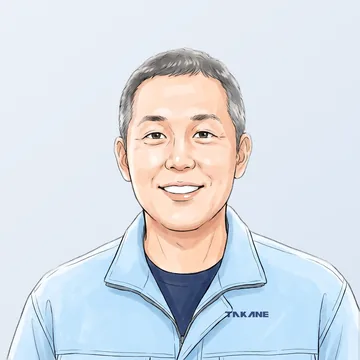
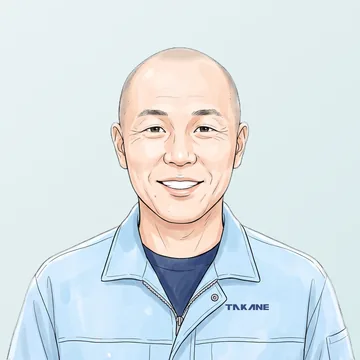
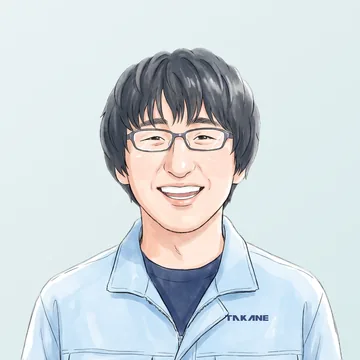

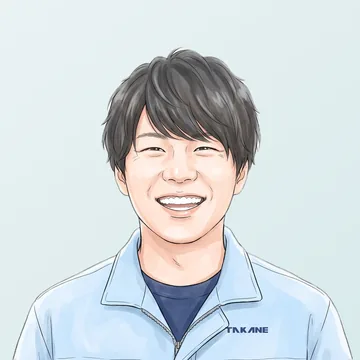
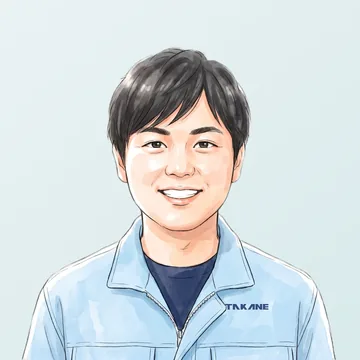

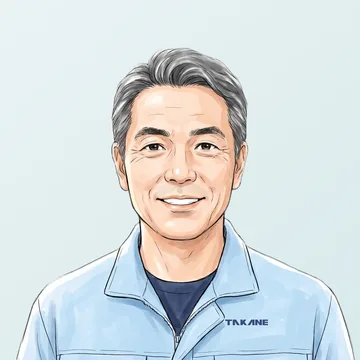
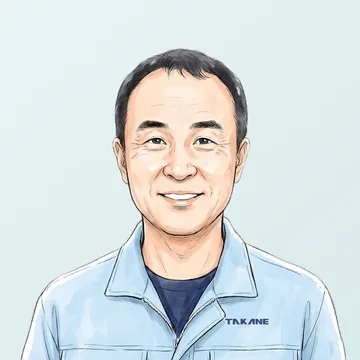
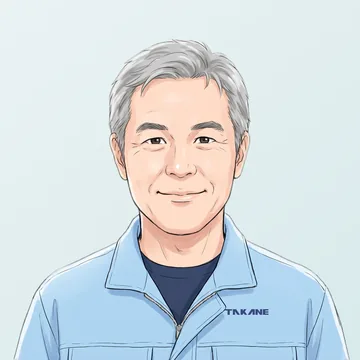

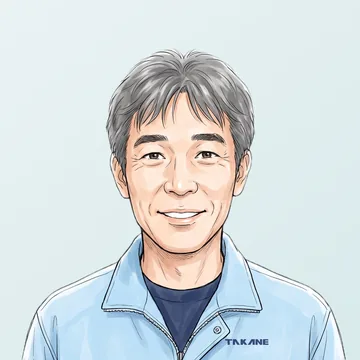
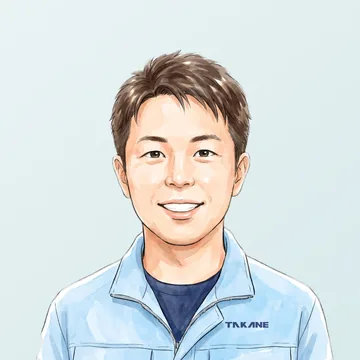
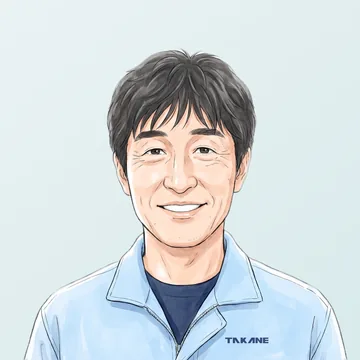

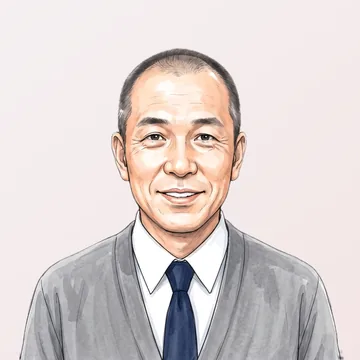


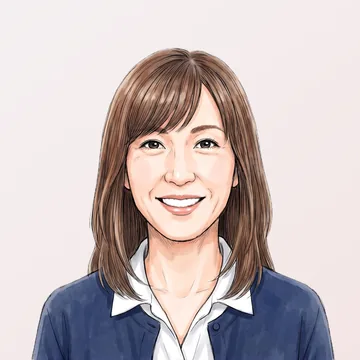

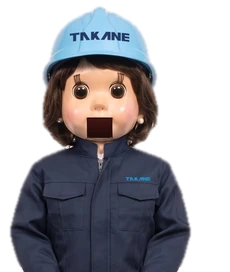

Yumiko Murakami, Chair of Matsutaka Denki, with staff of the Engineering Headquarters, the Regional Division and General Affairs.
Divisions
Three divisions
- 01Engineering HeadquartersEngineering HQElectrical works for schools, civic buildings and Self-Defense Force bases ordered by local governments and government agencies across the Kanto region, centred on Funabashi. We also take on work for private buildings.
- 02Regional DivisionRegional DivisionElectrical installation and repair in UR rental housing and Chiba prefectural housing across Chiba Prefecture. On some days we visit four or five occupied homes.
- 03General AffairsGeneral AffairsFrom receiving and placing orders to welcoming visitors and paperwork, the department handles all administrative work.
Scope of Work
The systems
we work on
We step down the voltage of incoming power, carry it to each floor through the main feeders, and divide it room by room at the distribution boards. The systems we handle vary with the type of building.
- Service entrance and power receiving
- Main feeders
- Refurbishment of vacant units
- Common-area lighting
- Intercoms with telephone function
- Distribution boards
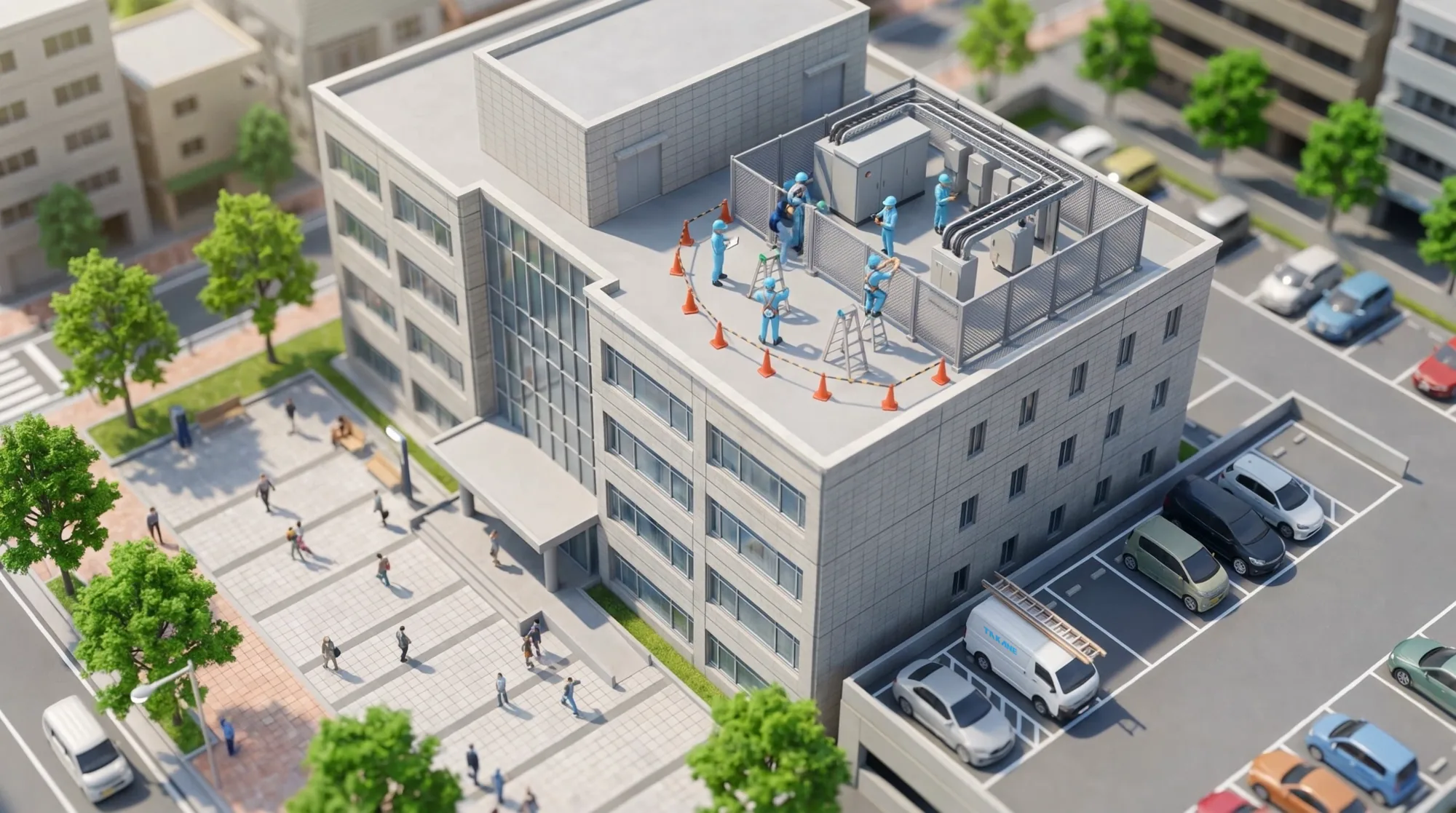
- High-voltage receiving and transforming equipment
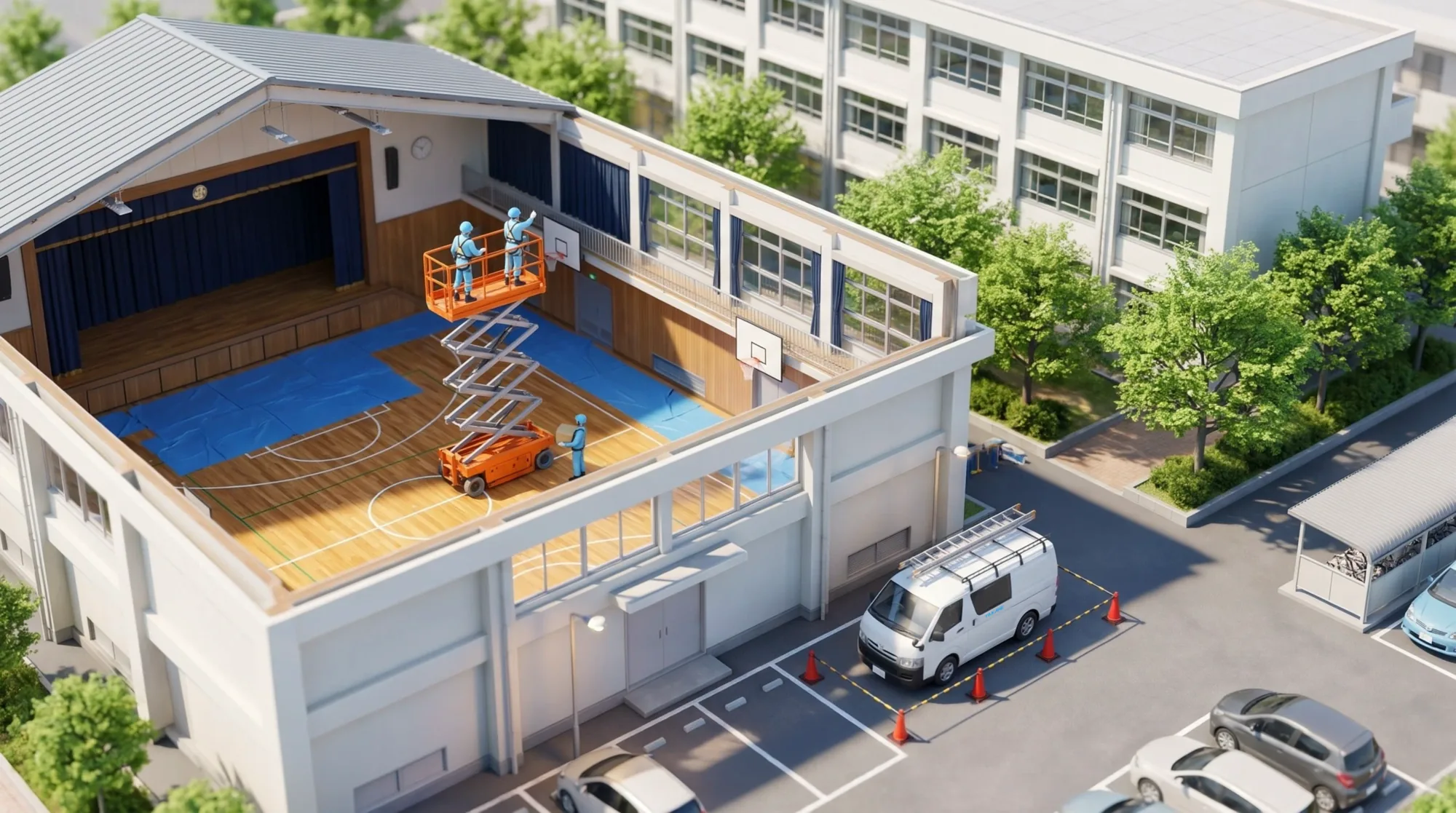
- Gymnasium lighting
- Power for school-lunch buildings
- Fire protection systems
- Receiving and transforming equipment
- Electrical systems for seismic retrofitting
- Communications systems
- Lighting
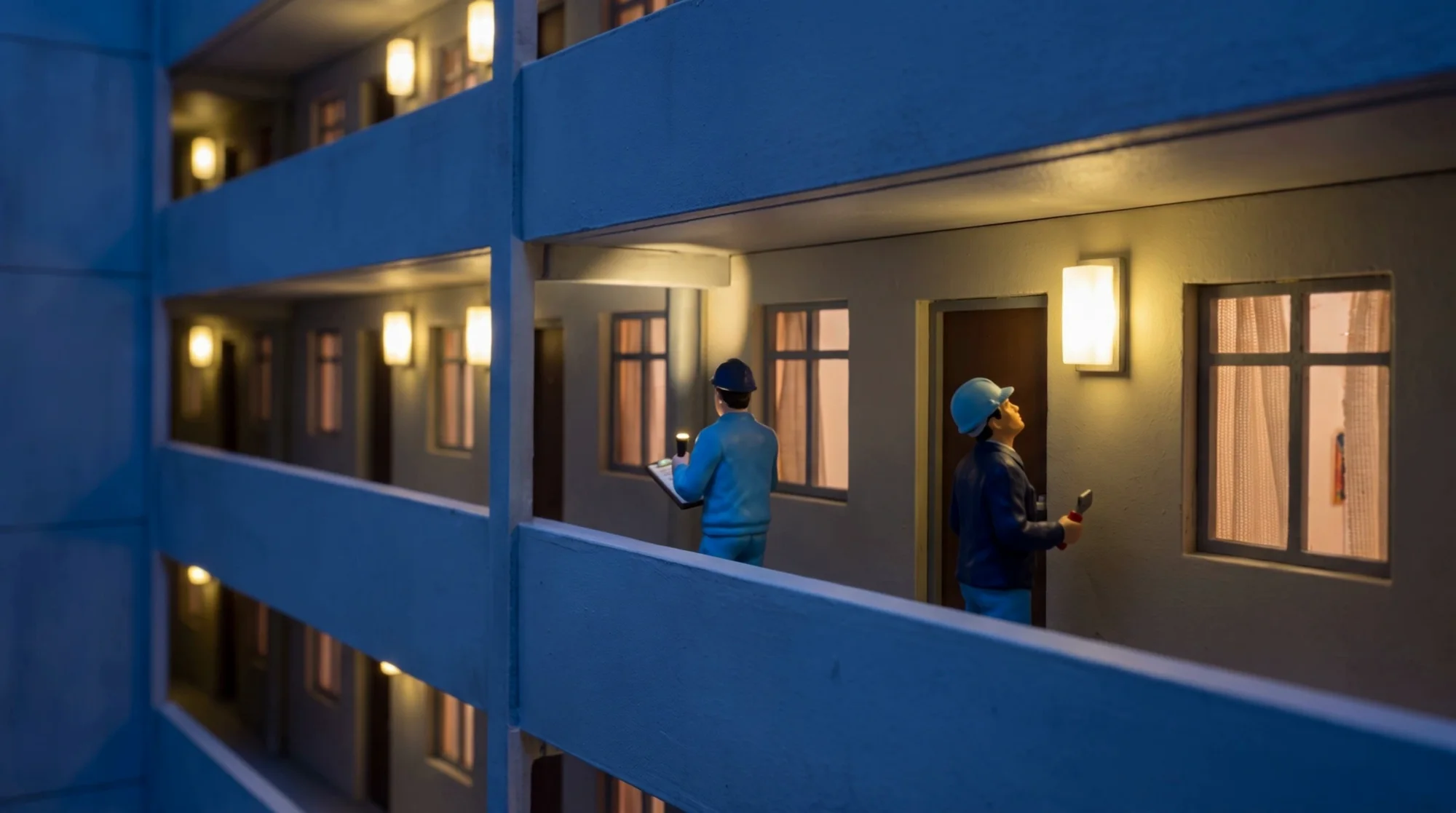
Housing
Refurbishing vacant units and repairing common-area lighting. Intercoms and distribution boards are replaced unit after unit.
Field Notes
Feature: A Day in the Regional Division
Leave no
footprints
Takane Electric, an electrical contractor in Funabashi.
From the 8:15 morning meeting to the return to the office in the evening.
In Matsugaoka, Funabashi, Chiba Prefecture, there is an electrical contractor founded in 1955: Takane Electric Co., Ltd. It carries out electrical installation and repair work in schools, civic buildings, UR rental housing and Chiba prefectural housing.Drawing on what three young members of the Regional Division said around the time they joined, and on company records, we follow one day, from the 8:15 morning meeting to the return to the office in the evening.
01 Morning8:15, Matsugaoka
The head office in Matsugaoka, Funabashi, was built in 1983 and rebuilt in 1993. The ground floor of the three-storey building is a garage, where the company vans line up in the morning.
Staff arrive around 8:00, and the morning meeting begins at 8:15. In the daily routine described by S. N. of the Regional Division (joined 2018), the vans leave for the sites between 8:30 and 9:00. There are no transfers. Every site worker comes to this building each morning before heading out.
Where they go depends on the division. The Engineering Headquarters handles work ordered by local governments and government agencies across the Kanto region, centred on Funabashi: schools, civic buildings and the Japan Maritime Self-Defense Force’s Shimofusa Air Base. The ordering bodies include the Ministry of Defense, the Ministry of Education, Culture, Sports, Science and Technology, Chiba Prefecture, Funabashi City and Sakura City, and a single project takes from several weeks to several months. The Regional Division goes round UR rental housing and Chiba prefectural housing across Chiba Prefecture; there, S. N. says, a day can mean four or five jobs. General Affairs stays at the head office and handles orders received and placed, telephone calls and visitors.
02 SchoolsInside the walls and ceilings of schools
The Engineering Headquarters’ track record lists school after school: electrical works for the extension of the school-lunch building at Funabashi Municipal Tsuboi Junior High School; renovation of gymnasium ceilings and other parts at Funabashi Municipal Takane-higashi Elementary School and others; electrical works for the major renovation of school buildings at Chiba Prefectural Funabashi Shibayama High School.
Our service guide names three fields: high-voltage receiving and transforming equipment, lighting systems and power systems. Power received at the substation equipment travels through the main feeders to the distribution boards, and from there branches out to the lights of classrooms and corridors. Distribution boards also appear in the Class 2 Electrician examination. Y. S. of the Regional Division, who was preparing for the exam at the time, put it this way:
“There are test questions on things like the wiring that runs from the ‘parent’ to the ‘children’, based on the distribution board.”
From a single distribution board, many circuits divide room by room. When the work is finished, that wiring is tucked away inside the walls and ceilings. The pupils who turn on the switches in their classrooms never see it.
“For example, not leaving shoe marks in the entrance after the work.”
Y. S., Regional Division
03 HomesInto the rooms where people live
The Regional Division works in homes where people live: lighting, air conditioners, ventilation fans, communications such as fibre-optic cable, and voltage changes. When a unit falls vacant, the electrics are put right before the next residents move in. The division also repairs common-area lighting and replaces intercoms.
When S. M. (joined 2020) started out, the work included fitting dedicated outlets for air conditioners and helping to run spare fibre-optic lines. On the spare lines, S. M. said:
“If a spare line gets kinked, it becomes useless, so we handle it with particular care.”
Y. S. was hired as Takane Electric’s first woman site worker. At her previous company, she had inspected equipment such as pumps that draw water up from underground. At her interview, she heard from Yumiko Murakami, then president, that the company wanted more women workers who could handle sites on their own. The work is not mainly a matter of physical strength, Y. S. says, so once it is learned, women can do it. The job advertisement also states that women electricians are welcome.
On site, the work includes replacing worn outlets and light bulbs. Much of it takes place in units that have just been renovated, and in rooms that have been cleaned she takes particular care. The next person to enter will be the resident, so nothing may be left dirty. Y. S. gave one example of what she can do:
“For example, not leaving shoe marks in the entrance after the work.”
04 LearningA book a senior colleague ordered
S. M. joined as a part-timer on a friend’s recommendation and became a full employee eight months later. Looking back on those first days, S. M. named one book.
“What stayed with me was that a senior colleague gave me a book as a present to celebrate my joining.”
It was the same book the colleague had read to pass the Class 2 Electrician exam, ordered online. S. M. studied with it and checked on site whatever was unclear. When a calculation problem caused trouble, the colleague at the next desk offered help.
S. N. accompanied site work for two weeks on a university internship, kept working part-time afterwards and joined the company after graduating. S. N. went on to qualify as a Class 1 Electrician and can now take on work in larger buildings such as apartment blocks and office buildings.
“With encouragement and advice, the sense of achievement when I can do something I couldn’t do before is like nothing else.”
Next, S. N. said, the aim was to qualify as a Fire Protection Equipment Engineer and extend the work to automatic fire alarm systems. The company pays the full cost of national qualification exam fees and training courses.
According to S. M., everyone is serious at work, but in the vans and back at the office they get on well and it is lively. In 2025, Takuhiro Murakami became Representative Director, with his elder brother Yuji Murakami alongside him as Director. Seventy years have passed since the founding, and more than forty since the head office was built in Matsugaoka.
Around 16:30, the site is tidied up and everyone gets into the vans. Around 17:00 the vans return to the head office and the paperwork is put in order. The working day ends at 17:30; on days when they can leave early, they leave the office at that time.
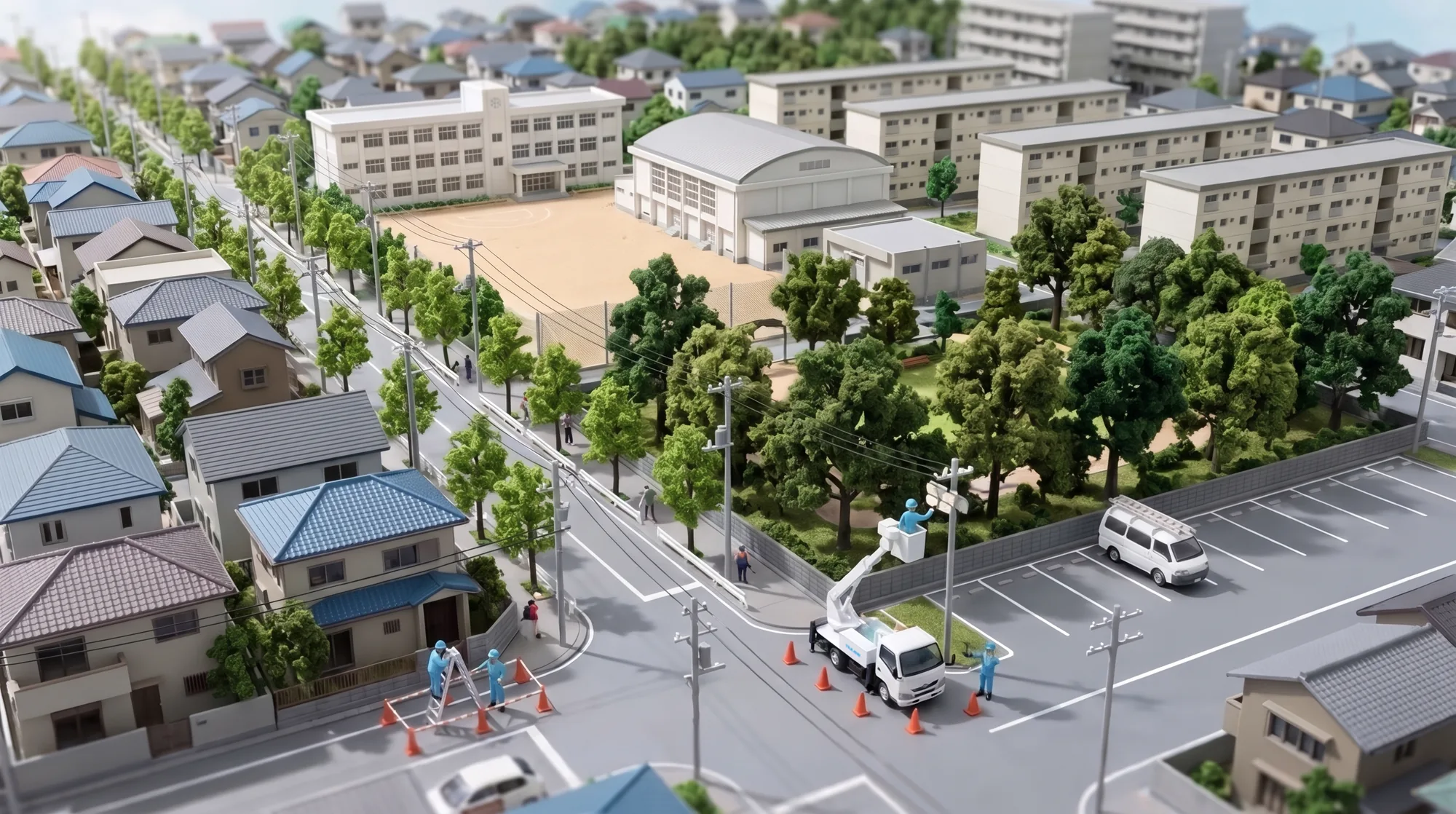
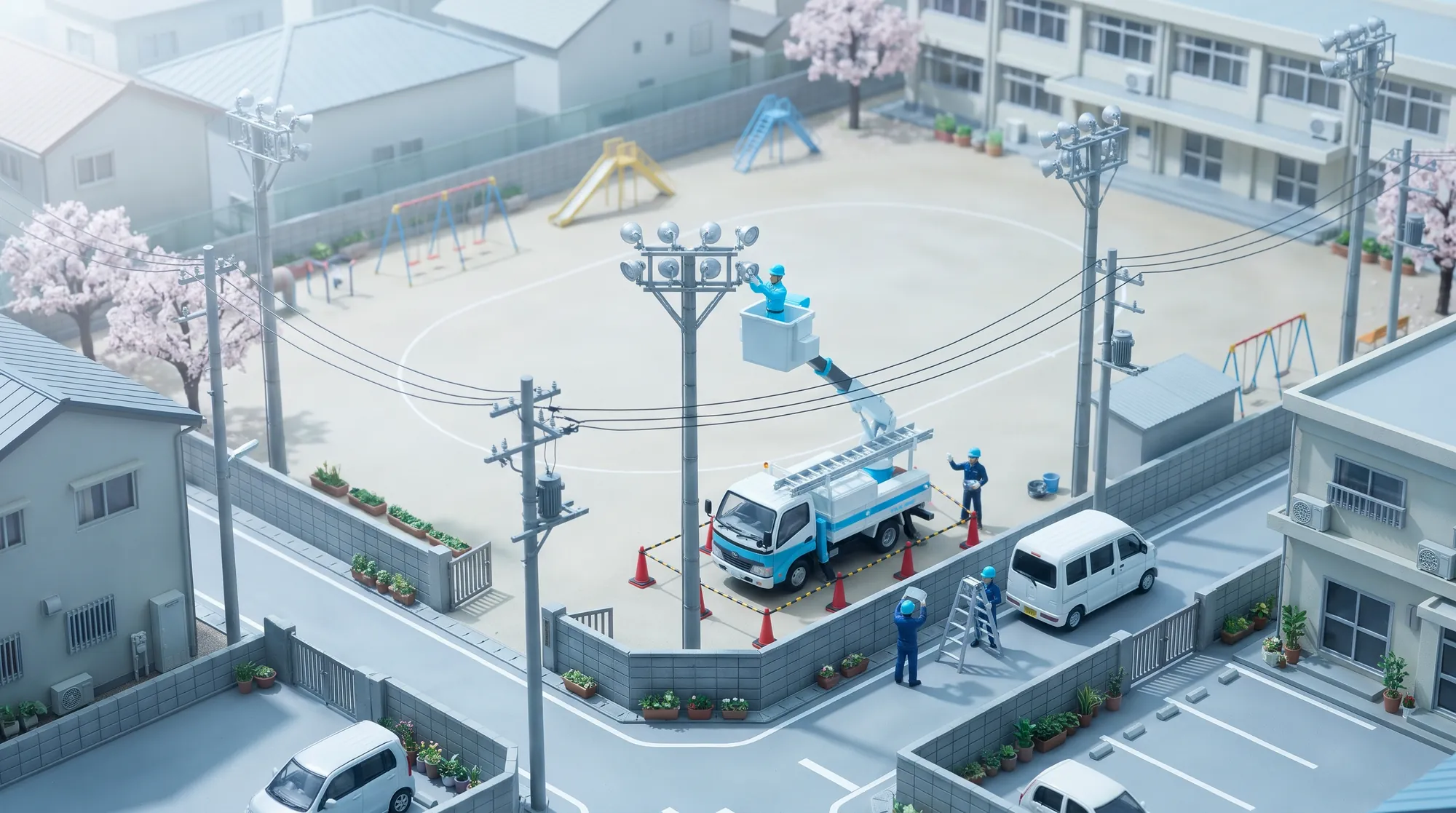
Staff comments are taken from “Voices of Our Staff” (2020). The miniature illustrations do not depict actual job sites.
Read “Voices of Our Staff”
Journal
Four articles based on company records and published sources.
- Public Works“Until the lights come on”Schools, civic buildings, bases: the steps a public electrical works project follows, from bidding to handover.
- Chronicle“Neon, Electric Store, Electric Works”From Yamada Neon with two employees to Takane Electric with thirty. Reading the company timeline, line by line.
- Power“The distribution board of 2040”AI data centres, solar cells on roofs and walls, nuclear fusion. The work of connecting wiring while the uses and sources of electricity change.
- In Their Words“Three stories from our staff”Three stories from staff, preserved in the 2020 company brochure.
Track Record
Major projects
In public works, the project name and the facility name are written on a site photo board and photographed for the record. We list our major projects in that format.
Engineering HQ
Electrical works for school-lunch building extension
Funabashi Municipal Tsuboi Junior High School
Gymnasium ceiling and related renovation
Funabashi Municipal Takane-higashi Elementary School and others
Electrical works for seismic retrofitting
Sakura City Hall Building 4 and others
Electrical works for major renovation of school buildings
Chiba Prefectural Funabashi Shibayama High School
Repair of power receiving and transforming equipment
JMSDF Shimofusa Air Base
Lighting renovation
Kokuritsu Minzoku Hakubutsukan
Regional Division
Repair of private-use electrical facilities
Hightown Shiohama and one other complex
Repair of intercoms with telephone function
Marina East Shion-no-Machi
Kikari outdoor and garden light replacement with LED fixtures
Second Avenue
Common-area lighting repair
Masago Daiichi Danchi
Contractor
Takane Electric Co., Ltd.
Recruitment
Join us,
then get qualified.
The company pays the full cost of national qualification exam fees and training courses. Every morning, staff leave the head office in Funabashi for the sites in company vans.Draft
- No transfers
- Bonuses twice a year
- Trial employment
- Women electricians welcome
- 01Internship
- 02Part-time work
- 03Joined as a new graduate
Contact
Talk to us
about your project.
Applications
We welcome both new graduates and experienced workers. We also accept requests for company visits and internships.
Apply